


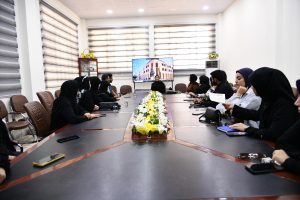
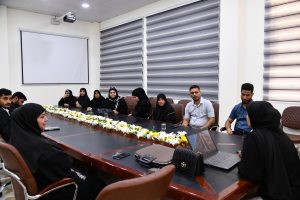
The Women’s Affairs Unit, in cooperation with the Rehabilitation and Employment Unit at the College of Law / University of Al-Qadisiyah, organized a scientific workshop entitled:
“Legal and Social Obstacles to Women’s Participation in Political Life.”
The workshop was presented by Asst. Prof. Dr. Sinan Abdul Hamza Taih, with the attendance of faculty members, students, and individuals interested in legal and social affairs.
Workshop Objectives:
The workshop aimed to shed light on the key challenges facing women’s participation in political life, both legally and socially, by:
• Analyzing relevant constitutional and legislative texts related to women’s political rights in Iraq.
• Comparing the national legal framework with successful regional and international experiences.
• Proposing effective mechanisms to politically empower women within a supportive legal and societal environment.
Key Findings:
• The workshop revealed a clear gap between the legal framework and actual practice regarding women’s political representation.
• It emphasized that prevailing patriarchal culture and social discrimination remain significant, albeit invisible, barriers to women’s active involvement in politics.
• It also highlighted that many women’s limited awareness of their political rights represents both an individual and societal obstacle to their participation.
Recommendations:
1. Review national legislation related to elections and political parties to ensure fair and equitable representation of women in elected bodies.
2. Launch awareness and training programs targeting young women to build their political and leadership capacities.
3. Integrate gender equality and gender-related concepts into legal and political science curricula.
4. Encourage media outlets to portray positive and empowering images of women in decision-making positions and highlight their achievements.
5. Enact clear laws that criminalize gender-based political violence, whether physical, psychological, or symbolic, and activate complaint and protection mechanisms.
6. Intellectually, socially, culturally, and legally protect women from being exploited as tools of political sensationalism or as instruments to serve hostile foreign agendas that undermine the dignity of the state or any of its institutions.
The workshop stressed that such exploitation not only harms the image of the state but also tarnishes the reputation of the legal profession and the dignity of Iraqi women, and undermines the credibility of genuine empowerment efforts.
7. Enhance partnerships between academic institutions and civil society organizations to develop sustainable advocacy campaigns and programs that support women’s meaningful political participation.
This workshop reflects the College of Law’s academic and societal commitment to supporting women’s rights, promoting a culture of political awareness, and encouraging constructive dialogue on the challenges hindering women’s political empowerment in Iraq.


لا تعليق